Silk, Satin, and Hair Health

A: You may find it doesn't make that much difference to switch to silk or satin blouses under normal everyday conditions, even if your hair is very long. There is a reason for this.
Pillowcases vs. Everyday Clothing
When you sleep, your head is in contact with the pillow for hours, with the weight of your head creating pressure on the hair underneath. As you toss and turn throughout the night, your hair repeatedly rubs against the fabric. This friction can cause tangling, and frizz, and damage your hair. Smooth silk or satin pillowcases help your hair glide easily, and lower that surface stress.When you are awake and moving about your daily routine, long hair moves freely over your blouse. Although it still experiences some friction against clothing, there is less intense pressure and repeated rubbing than there is when your hair is trapped against a pillow for hours. So, under normal circumstances, the difference between wearing a cotton blouse and a silk or satin one is unlikely to be huge.
When Clothing Friction Does Matter
However, clothing friction can become a more relevant factor in a couple of situations:• Tucking hair into turtlenecks, sweaters or blouses: If you tuck long hair into a tight turtleneck collar or blouse to mimic a bob or simply keep warm, you create an area where the hair is repeatedly rubbed against the fabric as you move your head. Over time, repeated friction can contribute to wear and breakage, especially in already fragile or damaged hair at the nape of your neck. A smooth, low-friction fabric may be a better choice in this situation.
• Hair trapped between layers: Leaving your hair sandwiched between a blouse and a heavy winter coat creates high-pressure friction. Turning your head or moving around can cause the trapped strands to scrape repeatedly against the surrounding fabrics.
Scarves and Hair Coverings
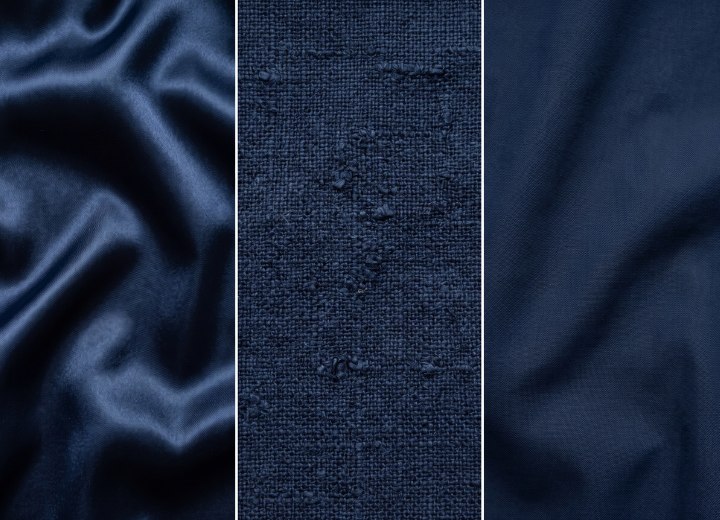
That being said, there is one fashion accessory where fabric choice can be particularly useful: scarves and other hair coverings. If you choose to wear a scarf or bonnet to cover your head or contain your hair, silk or satin can be a good choice. These smooth fabrics create less friction than rougher materials.Dermatologists often recommend silk or satin hair coverings for this reason. There is no need to avoid every other fabric, but if minimizing friction is your priority, a smooth silk or satin covering is a smart choice.
Thus, wearing silky or satiny blouses, shirts, and dresses won't necessarily make a lot of difference to your hair's overall condition day-to-day. The potential benefit becomes more relevant when your hair is repeatedly confined, pressed against the fabric, or trapped underneath another layer of clothing.
Understanding Silk vs. Satin
And there is another small distinction worth mentioning. Silk and satin aren't the same thing. Silk is a natural fiber, whereas satin describes a type of weave. Satin can be made from silk, polyester, nylon, or other fibers.What matters for the hair is largely how smooth and low-friction the fabric is, rather than simply whether it is labelled "silk" or "satin."
Practical Takeaways and Optical Benefits
So, if you love silk or satin clothing, there is absolutely no reason to stop wearing it. But you don't need to replace your entire wardrobe with silky fabrics in the hope of dramatically improving the health of your hair.For everyday wear, the effect is likely to be subtle. For hair that is repeatedly trapped or rubbed against clothing, choosing a smoother fabric may offer real protective value.
And even when the structural benefits are modest, there's an aesthetic bonus: smooth, shiny fabrics can reflect light onto the hair and create a healthy-looking shine. That's an optical illusion rather than an indication that the hair is really healthier, but there's nothing wrong with enjoying the visual effect!
©Hairfinder.com
See also:
How to protect your hair while you sleep
How to prevent static hair when wearing nylon clothes
Wearing shiny clothes and the optical illusion of shinier hair