The Best Curling Irons

A: When you go shopping for curling irons, you’ll find an overwhelming number of options. There are gold- and titanium-coated irons, ceramic irons, tourmaline irons, ionic irons, infrared irons, steam curling irons, and more. They’re available at a wide range of prices, from inexpensive drugstore models to professional salon tools.
Online shopping - whether you ultimately buy online or in a store - gives you the opportunity to read customer reviews and professional product comparisons. These reviews can provide valuable insight into how well an iron performs over time, how quickly it heats up, whether the temperature is accurate, and how durable it is. While every person's hair is different, reading about other users’ experiences can help you avoid products with recurring problems.
The main things to look for when buying a curling iron are that it:
A) Has adjustable temperature settings.
B) Has a smooth, non-stick finish.
C) Provides even heat distribution.
D) Has a suitable barrel size.
E) Is easy to hold and use.
These five features are much more important than the latest marketing buzzwords printed on the packaging.
Adjustable Temperature Settings
Adjustable temperature settings are essential because they allow you to choose the right amount of heat for your particular hair type. Using more heat than necessary increases the risk of burning the hair, drying it out, or causing long-term damage. Having control over the temperature helps you create curls while minimizing unnecessary stress on the hair.Different hair types require different heat levels. Coarse, thick hair generally needs higher temperatures to temporarily reshape the hair's natural protein bonds, while fine hair requires much less heat because the strands are thinner and heat up more quickly. Likewise, color-treated, chemically processed, dry, or damaged hair should always be styled at lower temperatures to avoid making existing damage worse.
If the curling iron you're considering doesn't offer adjustable heat settings, it's usually best to pass it by. A single fixed temperature simply can't accommodate every hair type safely.
As a general guideline:
• Fine, fragile, bleached, or damaged hair: typically does best with lower temperatures between 250°F and 300°F (120°C to 150°C).
• Medium-textured or healthy hair: usually responds well to moderate heat between 300°F and 380°F (150°C to 193°C).
• Thick, coarse, or highly curl-resistant hair: often requires higher temperatures between 380°F and 450°F (193°C to 232°C) to create lasting curls.
The goal is always to use the lowest temperature that produces the results you want.
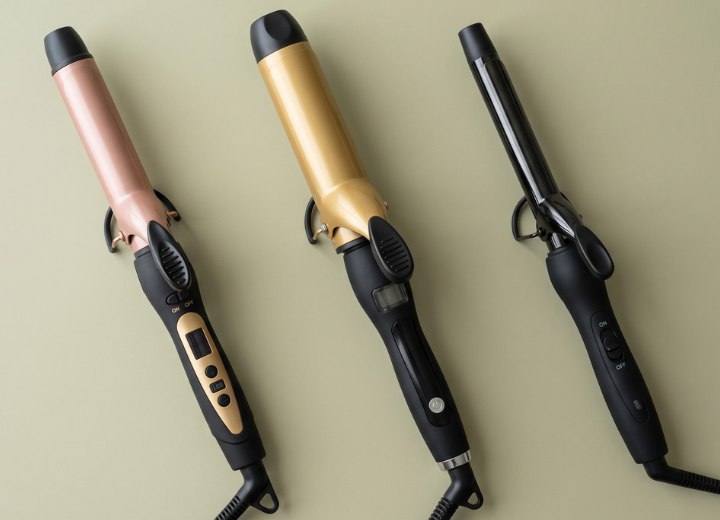
A Smooth, Non-Stick Surface
A smooth, non-stick finish doesn't necessarily mean the barrel has to be Teflon-coated. Instead, carefully inspect the tool and make sure the barrel feels extremely smooth and that all edges are rounded without sharp corners, rough seams, or exposed joints.Rough edges can snag or even cut into the hair while you're wrapping it around the barrel. Over time, this repeated mechanical stress can lead to split ends, breakage, and weakened hair. A high-quality curling iron should allow the hair to glide smoothly over the barrel with very little resistance.
The specific barrel material is largely a matter of personal preference:
• Ceramic barrels are popular because they tend to distribute heat evenly and heat from the inside out using far-infrared heat.
• Titanium barrels are often favored by professionals because they heat quickly, are highly durable, and maintain high temperatures well under heavy use.
• Tourmaline and ionic coatings are marketed as helping reduce static and frizz by producing negative ions during styling to seal the hair cuticle.
Even Heat Distribution
Even heat distribution is another feature that should never be overlooked. If one section of the barrel becomes hotter than another, certain portions of the hair will receive significantly more heat during styling.Unfortunately, this can result in hot spots that scorch or overstress sections of the hair while other areas remain underheated and fail to curl properly. Over time, these repeated hot spots can lead to localized, permanent heat damage.
A well-designed curling iron should heat evenly from end to end and maintain a consistent temperature while you're styling. This not only helps protect the hair but also produces more uniform, longer-lasting curls.
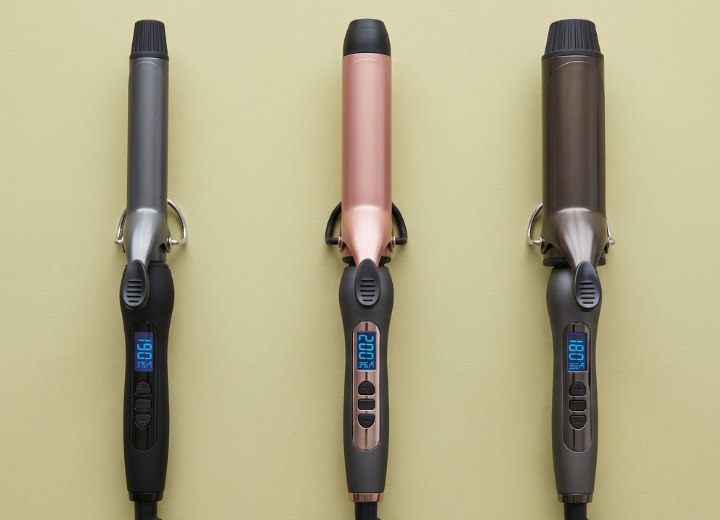
Barrel Size
Another important consideration is the size of the barrel. The diameter you choose affects the type of curl you'll achieve. Smaller barrels create tighter curls, medium-sized barrels produce classic curls, and larger barrels create loose curls or soft waves.If you prefer versatile styling, a 1-inch (25mm) barrel is widely considered the universal gold standard. It is the most practical choice because it works well on almost all hair lengths and can produce tight curls, classic waves, or soft bends depending on how you wrap and brush out the hair.
Ease of Use
Don't overlook comfort and convenience. A curling iron that's awkward to hold or difficult to maneuver can make styling frustrating, especially if you use it frequently.Features such as a comfortable handle, a swivel cord that won't twist, a sturdy clamp, a cool tip for safer handling, and a quick heat-up time can make a noticeable difference in your styling experience.
An automatic shut-off feature is also a crucial safety function, especially if you are prone to forgetting to unplug styling tools before leaving the house.
Protect Your Hair!
Even the best curling iron can damage hair if it's used incorrectly.Always start with clean, completely dry hair. Applying high heat to damp or wet hair causes the moisture trapped inside the hair shaft to instantly boil and turn to steam. This rapid expansion can literally explode through the hair fiber, creating microscopic fractures that cause immediate, irreversible breakage.
Always apply a good heat protectant before styling. These products typically use specialty polymers and silicones (like dimethicone) to coat the hair shaft, creating a protective barrier. Finally, hold the hair around the barrel for only as long as necessary (usually 5 to 8 seconds is plenty) to produce the desired curl without overexposing it to heat.
©Hairfinder.com
See also:
A what's what guide to curling irons
Curling iron and flat iron damage
Thermal styling with curling irons